
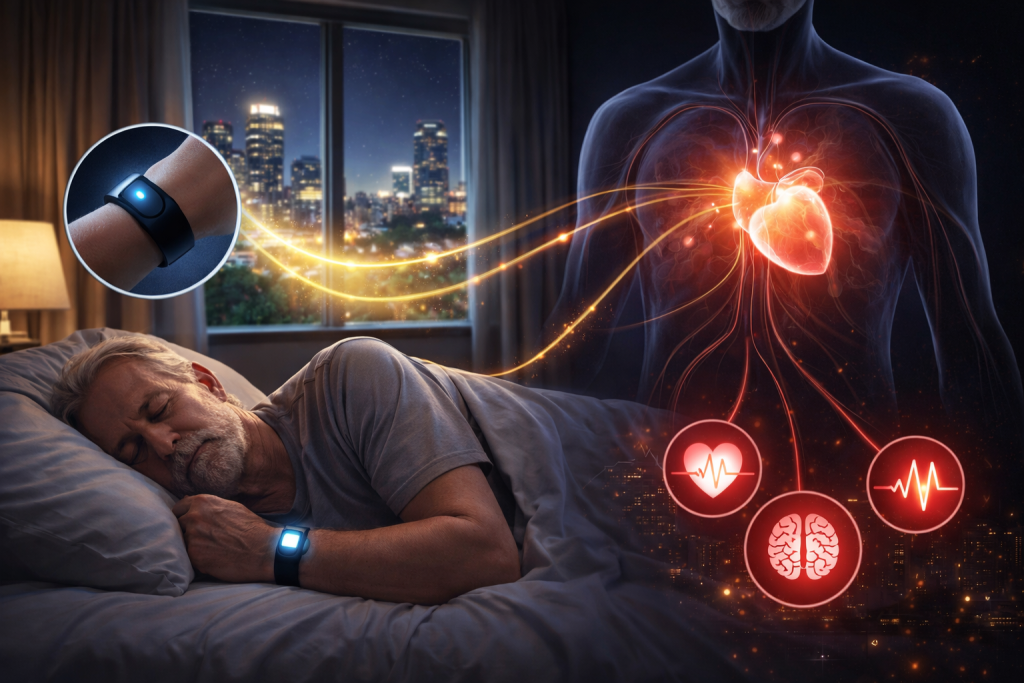
A prospective cohort study published in JAMA Network Open last October examined how nighttime light exposure may influence cardiovascular health. The researchers analyzed data from nearly 90,000 participants in the UK Biobank, with an average age of about 62. Using wrist-worn light sensors, they collected roughly 13 million hours of light exposure data over a period approaching 10 years—amounting to around 700,000 person-years of follow-up.
The findings showed a clear, dose-dependent relationship between light exposure at night and cardiovascular risk. Individuals experiencing brighter nighttime conditions had progressively higher risks compared to those sleeping in darker environments (defined as the lowest 0–50% of light exposure). Those in the 51st–70th percentile had a 12% greater risk of developing coronary artery disease, which increased to 20% in the 71st–90th percentile and 32% in the highest exposure group (91st–100th percentile).
A similar pattern was observed for other cardiovascular outcomes. Participants in the highest light exposure group had a 47% increased risk of myocardial infarction and a 56% higher risk of heart failure. Additionally, elevated nighttime light exposure was associated with increased risks of atrial fibrillation (32%) and stroke (28%).
Overall, the study suggests that greater exposure to light during typical sleeping hours may be an important, and potentially modifiable, factor linked to cardiovascular disease risk.
