
What if the reason your shoulder pain persists isn’t a lack of rest, but a lack of the right kind of movement? Many people feel a persistent dull ache during simple daily tasks or lose their range of motion when reaching for a high shelf. It’s natural to feel confused about whether to rest the joint or keep it moving, especially when every stretch feels uncertain. By implementing specific corrective exercises for shoulder pain, you can address the underlying mechanical imbalances that cause discomfort rather than just masking the symptoms.
This article provides a structured checklist and professional strategies to help you achieve long-term mobility and pain-free movement. We will explore how targeted movements stabilize the rotator cuff, explain the role of professional alignment in lasting recovery, and discuss when advanced options like Softwave therapy are appropriate for your journey. You’ll gain a clear daily routine to follow, ensuring you have the tools to maintain a healthy, active lifestyle. Our goal is to partner with you in your health, providing the clinical expertise and supportive guidance you need to feel your best again.
Key Takeaways
- Learn why “unfreezing” the joint is the critical first step for acute relief before you attempt to build strength.
- Discover how a structured routine of corrective exercises for shoulder pain can stabilize the rotator cuff and restore your natural range of motion.
- Perform an ergonomic audit of your workspace to maintain a “shoulder neutral” position and prevent recurring aches during the workday.
- Understand why professional chiropractic adjustments are the missing piece that restores the nervous system’s control over shoulder mechanics.
- Explore how advanced technologies like Softwave can jumpstart your recovery when traditional movements feel too uncomfortable to begin.
Table of Contents
- Understanding Shoulder Ache and Pain: Your Recovery Checklist
- Phase 1: Mobility and Flexibility Checklist
- Phase 2: Strength and Stability Checklist
- Phase 3: Daily Habits and Prevention Checklist
- Professional Integration: When Exercise Isn’t Enough
Understanding Shoulder Ache and Pain: Your Recovery Checklist
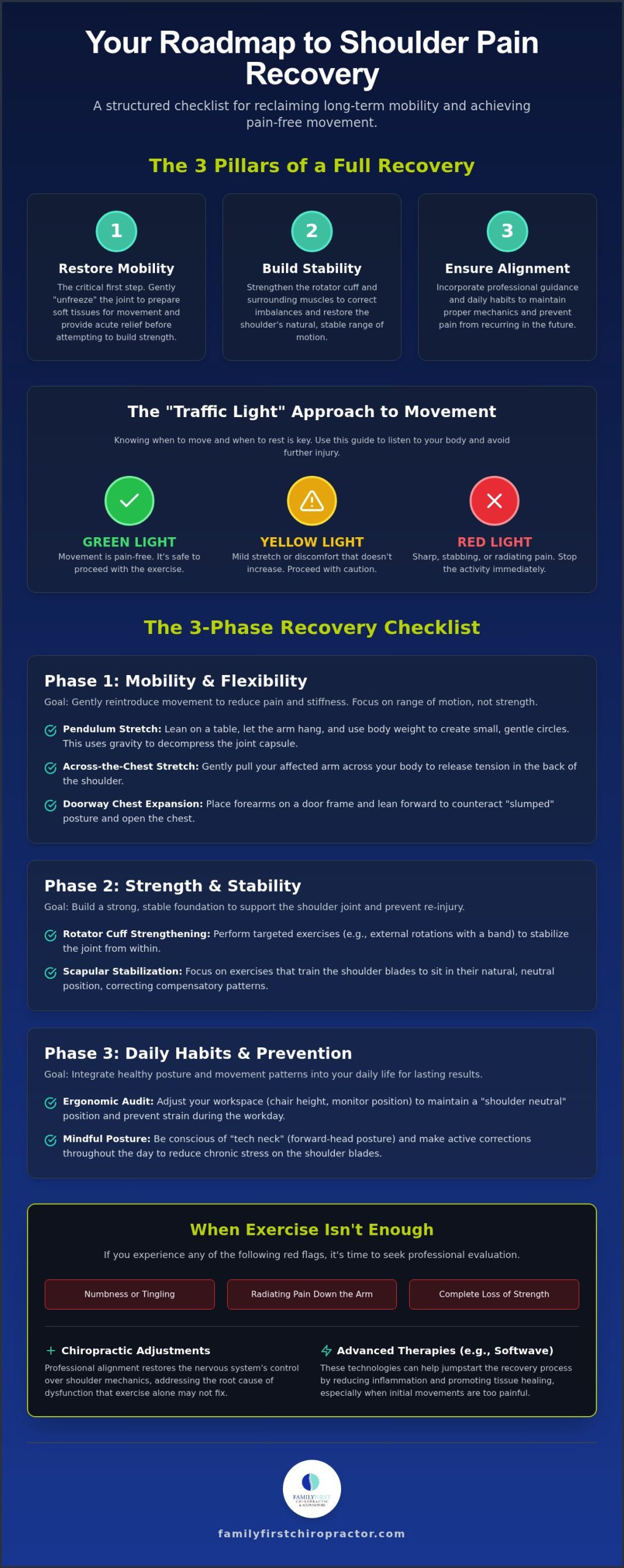
Shoulder pain is rarely just a localized annoyance. It serves as a sophisticated alarm system from your body, signaling either mechanical dysfunction or inflammatory stress. When you feel that familiar ache, your system is communicating that the delicate balance of the glenohumeral joint has been disrupted. Instead of viewing this as a setback, we encourage you to see it as a prompt for a structured recovery. Our “Checklist Approach” focuses on three pillars: restoring mobility, building stability, and ensuring professional alignment. By following this sequence, you transition from managing a symptom to mastering functional movement, which is the ability to reach, lift, and carry during your daily life without a second thought.
For many Charlotte residents, the instinct is to “push through” the discomfort during a gym session or a busy workday. This is often the most significant mistake one can make. Forcing a joint to perform when it is improperly aligned often leads to compensatory patterns, where other muscles overwork to protect the injured area. This cycle creates a ripple effect of tension that can eventually lead to Shoulder Impingement Syndrome, a condition where the tendons are physically pinched during movement. Utilizing specific corrective exercises for shoulder pain helps break this cycle by retraining the muscles to work in harmony again.
Common Causes of Shoulder Dysfunction
Dysfunction often stems from two distinct sources: acute strain or chronic postural stress. While a rotator cuff strain might happen suddenly, many people suffer from the cumulative effects of “tech neck,” where a forward-head posture pulls the shoulder blades out of position. Interestingly, left shoulder pain can sometimes highlight specific muscle imbalances caused by repetitive driving or seated work habits. Over time, these mechanical shifts trigger low-grade inflammation, which settles into the joint capsule and results in that stubborn, chronic stiffness that makes morning movements feel heavy.
When to Move and When to Rest
Navigating the recovery process requires a “Traffic Light” approach to movement. A green light means the movement is pain-free; a yellow light indicates a mild stretch or slight discomfort that doesn’t increase; a red light is sharp, stabbing pain that tells you to stop immediately. While it might seem safe to choose complete rest, total inactivity can actually lead to “Frozen Shoulder,” where the connective tissue thickens and restricts all motion. The key is to keep the joint moving within the green and yellow zones. However, if you experience numbness, radiating pain down the arm, or a complete loss of strength, it’s time to visit a professional chiropractic center to rule out more serious structural issues. Integrating corrective exercises for shoulder pain under professional guidance ensures you are moving safely toward a full recovery.
Phase 1: Mobility and Flexibility Checklist
Before you can focus on building muscle, you must first ensure the joint can move through its intended path. Attempting to strengthen a restricted shoulder often leads to further irritation, which is why we prioritize “unfreezing” the area before introducing load. By beginning with mobility-focused corrective exercises for shoulder pain, you prepare the soft tissues for more demanding tasks while reducing immediate discomfort. This phase isn’t about pushing your limits; it’s about gently reminding your body how to move with ease and fluid grace.
The Pendulum Stretch is the essential first step for anyone seeking acute relief. To perform this, lean over a sturdy table and let your affected arm hang freely toward the floor, then gently shift your body weight to create small, circular motions. This movement uses gravity to create space within the joint capsule, providing a gentle decompression that often reduces sharp pain signals. Similarly, the Across-the-Chest Stretch helps increase the range of motion in the posterior capsule. By pulling your arm gently across your body, you release the tension that accumulates in the back of the shoulder, making it easier to reach behind you or across your lap.
For those spending long hours at a desk, the Doorway Chest Expansion is vital for recovery. By placing your forearms on a door frame and leaning forward, you counteract the “slumped” posture typical of office work, which opens the anterior chest and allows the shoulder blades to sit in their natural, neutral position. This simple adjustment reduces the strain on your neck and upper back, creating a foundation for healthy movement throughout the day.
Dynamic Mobility Drills
To further enhance your results, we recommend following a structured Shoulder Conditioning Program that incorporates dynamic drills. Movements like Controlled Articular Rotations (CARs) involve moving the arm through its full circular range of motion to maintain joint health and “lubricate” the socket. Integrating the “Thread the Needle” stretch is also beneficial, as it links thoracic spine mobility with shoulder function. Since the shoulder blade relies on a flexible mid-back to move correctly, improving your thoracic range of motion is often the secret to lasting shoulder relief.
Safe Stretching Guidelines
When performing these corrective exercises for shoulder pain, aim for a “sweet spot” of 30 to 60 seconds per hold. This duration allows the nervous system to relax and permits the collagen fibers within the tendons to safely adapt to the new length. Deep, diaphragmatic breathing is equally important; it signals to your brain that the body is safe, which lowers muscle guarding and makes the stretch more effective. In contemporary recovery protocols, static stretching is defined as the controlled maintenance of a joint at its comfortable end-range to facilitate neurological inhibition and safe tissue elongation. If you find that your range of motion remains limited despite these efforts, a consultation for chiropractic care can help identify if a joint misalignment is preventing your progress.
Phase 2: Strength and Stability Checklist
Once you have “unfrozen” the joint through the mobility drills in Phase 1, the next step is to secure those gains with stability. Stability provides the control needed to keep the humeral head centered in its socket during activity. Without it, even a flexible shoulder remains vulnerable to injury. Transitioning from “length” to “strength” is a critical shift in your recovery. By incorporating targeted corrective exercises for shoulder pain, you provide the structural support necessary for a return to heavy lifting or demanding household chores.
Scapular retraction is often described as training the “rudder” of your shoulder. By gently squeezing your shoulder blades together and down, you set a stable foundation for every arm movement. External rotation with a light resistance band is another cornerstone, as it builds a resilient rotator cuff. These Effective Shoulder Pain Exercises focus on the small, stabilizing muscles that are often neglected in traditional gym routines. Additionally, the “Wall Slide” serves as both a diagnostic and corrective tool. It helps you identify if your shoulder blades are moving correctly as you reach overhead, ensuring your daily movements don’t cause further pinching.
Core Stability for Shoulder Support
Your core acts as the physical foundation for all upper body movement. If your midsection is weak, your shoulders often compensate by overworking, which leads to fatigue and pain. Plank variations can challenge your shoulder stability without causing overstrain, provided your form is perfect. We often link these movements to chiropractic exercises for posture, as a strong trunk allows the shoulders to rest in their optimal anatomical position. This systemic harmony is what allows for long-term, pain-free vitality during your busy schedule.
Strengthening the Serratus Anterior
The “Push-Up Plus” is a specific movement designed to target the serratus anterior, also known as the “boxer’s muscle.” This muscle is responsible for keeping the shoulder blade flat against the rib cage. When it’s weak, you might notice “winging” or experience increased impingement during reaching. To perform this, you simply push your shoulder blades away from each other at the top of a plank or wall-press position without bending your elbows. You can start this progression with wall-based movements, which are gentle on the joints, before moving to floor-based challenges as your strength improves. Consistent focus on these corrective exercises for shoulder pain helps restore the mechanical balance needed for a fully functional upper body.
Phase 3: Daily Habits and Prevention Checklist
Consistency is the bridge between temporary relief and a permanent change in your quality of life. While the corrective exercises for shoulder pain detailed in the previous phases provide the necessary mechanical corrections, your daily habits determine how long those improvements last. We view your recovery as a partnership where your choices at home and work amplify the clinical care you receive. By auditing your environment, you ensure that you aren’t accidentally undoing the progress made during your focused exercise sessions.
For many Charlotte residents, the home office has become a primary workspace. An ergonomic audit is your first line of defense. Ensure your monitor is at eye level and your keyboard allows your elbows to rest at a 90-degree angle, keeping your shoulders in a “neutral” position. To prevent static muscle fatigue, implement the “20-20-20” rule. Every 20 minutes, take 20 seconds to look 20 feet away while standing up to gently roll your shoulders back. Even your sleep hygiene plays a role; sleeping on your back is generally best for recovery, whereas side sleeping can compress the joint and restrict blood flow. Supporting these external changes with proper hydration and a diet rich in lean proteins provides the internal building blocks for soft tissue repair.
Postural Awareness in Daily Life
Maintaining an upright, neutral spine is easier when you use the “String Method.” Imagine a silver string attached to the crown of your head, gently pulling you toward the ceiling. This simple visualization helps align the neck and shoulders without creating new tension. Be mindful of how you carry heavy bags or laptop cases around the Queen City, as a heavy weight on one side can create significant shoulder asymmetry. When driving or sitting for long periods, use your rearview mirror as a cue; if you can no longer see clearly through it, it’s a sign you’ve begun to slouch and need to reset your posture.
Preventing Overuse Injuries
Avoid the common pitfall of doing “too much, too soon” by following the 10% rule, which suggests increasing your activity levels or weight resistance by no more than 10% each week. This gradual loading allows your tendons and ligaments to adapt without becoming inflamed. Weekend warriors should prioritize a dynamic warm-up protocol that mimics the movements of their sport to prepare the rotator cuff for sudden demands. Maintaining a forward-leaning posture while using mobile devices creates a significant mechanical disadvantage, as every inch of forward head tilt increases the effective weight on the shoulder girdle and upper back muscles. If you find it difficult to maintain these habits due to persistent stiffness, our team can help you find the right path forward with personalized chiropractic and corrective care.
Professional Integration: When Exercise Isn’t Enough
While the previous phases of our checklist provide a strong foundation, there are times when corrective exercises for shoulder pain aren’t enough to overcome deep-seated structural issues. Professional alignment is often the missing piece of the recovery puzzle. If the joint itself is restricted or the nervous system isn’t communicating effectively with the muscles, even the best exercise routine will face diminishing returns. Chiropractic adjustments serve to restore this vital communication, ensuring that your brain can accurately control and stabilize the shoulder during movement. Think of it as resetting the software so the hardware can function as intended.
When inflammation is particularly high, movement can feel nearly impossible. This is where advanced technologies like Softwave and Redlight therapy become essential. Softwave uses electro-hydraulic acoustic waves to trigger cellular repair at the source of the injury. This process jumpstarts the healing of damaged tissues, making it easier for you to begin your corrective movements. Redlight therapy accelerates mitochondrial function, which provides the energy your cells need for faster tissue recovery and reduced systemic stress. Together, these professional interventions create an environment where your “homework” exercises can finally yield the results you deserve.
The Family First Approach in Charlotte
Dr. St. Germain develops personalized care plans that treat the body as an integrated whole rather than a set of isolated symptoms. These plans often combine chiropractic care with targeted exercises to ensure that once a joint is aligned, it stays that way through improved muscular support. During your first visit to our family first chiropractic center, we perform a thorough evaluation to identify your specific mechanical triggers. We may also integrate acupuncture and massage therapy to release deep muscular trigger points that standard stretching simply cannot reach. This holistic approach ensures every layer of your shoulder health is addressed simultaneously.
Advanced Recovery Technologies
For those dealing with chronic conditions like tendonitis or bursitis, Softwave therapy offers a non-invasive alternative to more aggressive interventions. By stimulating the body’s natural regenerative response, it clears the mechanical path for corrective exercises for shoulder pain to be more effective. Redlight therapy works in tandem by reducing localized inflammation, which allows you to move through your mobility drills with significantly less discomfort. This synergy of high-tech tools and traditional chiropractic care creates a comprehensive recovery environment. It moves you beyond simple symptom management and toward a lifestyle of lasting, pain-free vitality.
Your Path to Lasting Shoulder Vitality
Achieving a pain-free life requires a dedicated partnership between your daily habits and professional care. By following a structured checklist of corrective exercises for shoulder pain, you’ve learned to prioritize joint mobility before building stability and to audit your environment for long-term success. These steps ensure your body moves with the harmony and efficiency it was designed for. This sequence allows you to return to the activities you love without hesitation or discomfort.
When self-care reaches its limits, our team is ready to provide the specialized support you need for a full recovery. Dr. St. Germain offers personalized holistic recovery plans that integrate advanced technologies like Softwave and Redlight therapy to jumpstart your healing process. These tools work in tandem with chiropractic adjustments to address the mechanical root causes of your discomfort. We invite you to Schedule Your Shoulder Evaluation at Family First Chiropractic today. Your journey toward restoration and comfort is well within reach, and we look forward to supporting your progress every step of the way.
Frequently Asked Questions
Is it okay to do corrective exercises if my shoulder still hurts?
Movement is generally beneficial as long as you follow the “Traffic Light” rule mentioned earlier in this guide. You can safely perform exercises that produce a “yellow light” sensation, such as mild tension or a gentle stretch. However, you should stop immediately if you feel a “red light” signal of sharp, stabbing pain. Keeping the joint mobile within a pain-free range prevents the connective tissue from tightening into a frozen shoulder.
How long does it take for corrective exercises to fix shoulder pain?
Most individuals begin to notice a significant improvement in their range of motion within two to four weeks of consistent practice. While initial relief can happen quickly, building lasting structural stability usually requires eight to twelve weeks of dedication. This timeframe allows the tendons and ligaments to physically adapt to the new demands. Consistency with your corrective exercises for shoulder pain is the most important factor in achieving long-term results.
Can a chiropractor actually help with shoulder pain, or just back pain?
Chiropractors are highly trained to evaluate and align all joints of the body, including the complex shoulder girdle. By ensuring the cervical spine and scapula are properly positioned, a chiropractor restores the nervous system’s ability to control the rotator cuff muscles. This professional alignment provides the mechanical foundation that makes your home exercises more effective. It addresses the root cause of the dysfunction rather than just treating the localized ache.
What is the best exercise for a rotator cuff injury?
Scapular retraction is often considered the most foundational exercise because it stabilizes the “rudder” of the shoulder. By training the shoulder blades to sit correctly against the rib cage, you create space for the rotator cuff tendons to move without being pinched. While the “best” movement depends on your specific injury, starting with this stabilization drill helps protect the joint during all other daily activities. It serves as a vital starting point for most recovery plans.
How often should I perform my shoulder corrective checklist?
You will achieve the best results by performing your corrective exercises for shoulder pain once or twice daily. Short, frequent sessions of ten to fifteen minutes are more effective for retraining the nervous system than one long session per week. This regular repetition reinforces healthy movement patterns and prevents the muscles from returning to their old, guarded positions. Think of these sessions as small, daily investments in your future mobility.
Can I do these exercises at home without any special equipment?
Yes, many of the most effective movements require nothing more than a sturdy table, a doorway, or a flat wall. The pendulum stretch uses gravity for decompression, while wall slides use your own body weight to track movement quality. As your strength improves, you might choose to incorporate a light resistance band to add a new challenge. These simple home-based tools are often all you need to maintain a successful and consistent recovery routine.
When should I stop exercising and see a professional in Charlotte?
You should seek a professional evaluation if you experience radiating numbness, a complete loss of strength, or pain that wakes you up at night. These “red flags” suggest that the issue may involve more than simple muscle tightness and requires clinical intervention. If your progress stalls despite consistent exercise, visiting our Charlotte center can help identify underlying misalignments. We can then provide advanced treatments like Softwave to jumpstart the healing process.
Does Redlight therapy really help with shoulder inflammation?
Redlight therapy supports the recovery process by accelerating mitochondrial function within your cells. This boost in cellular energy reduces localized inflammation and provides the building blocks necessary for faster soft tissue repair. When inflammation is lowered, you can perform your corrective movements with much greater comfort and ease. It acts as a powerful catalyst that enhances the effectiveness of your entire physical recovery plan.