What if the sharp, stabbing pain keeping you awake at night isn’t a permanent sentence for surgery, but a signal that your body’s healing process simply needs a jumpstart? It’s incredibly frustrating when reaching for a high shelf or simply putting on a jacket becomes a daily struggle. You’ve likely felt that deep, persistent throb during the quiet hours of the night, wondering if you’ll ever regain the full range of motion you once took for granted. If you’re concerned that cortisone shots or invasive operations are your only options left, please know there is another way. Many residents are now turning to softwave therapy for shoulder pain charlotte to find a path forward that avoids the risks of the operating room.
You deserve a recovery plan that looks beyond just masking symptoms. In this article, you’ll discover how FDA-cleared SoftWave technology targets the root cause of shoulder dysfunction to accelerate natural tissue repair without needles or downtime. We’ll explore the science behind these patented acoustic waves, explain how they stimulate dormant cellular cycles, and show you how this non-invasive approach can help you return to an active, pain-free life.
Key Takeaways
- Identify why sharp shoulder pain often stems from underlying issues like rotator cuff tendonitis or impingement rather than just simple muscle fatigue.
- Learn how softwave therapy for shoulder pain charlotte uses patented acoustic waves to trigger your body’s natural tissue regeneration and biological healing response.
- Understand the process of angiogenesis, which improves blood flow to the shoulder capsule to help repair tendons that typically suffer from poor circulation.
- Compare the benefits of non-invasive technology against the high costs, potential scar tissue, and lengthy recovery times associated with traditional surgery.
- Discover what happens during a personalized “Discovery” session where Dr. St. Germain identifies your specific pain points to create a customized recovery path.
Table of Contents
- Understanding the Causes of Sharp Pain in the Shoulder
- What is SoftWave Therapy and How Does It Work?
- Why SoftWave is a Game-Changer for Shoulder Injuries
- SoftWave vs. Traditional Shoulder Pain Treatments
- Experience SoftWave Therapy for Shoulder Pain in Charlotte
Understanding the Causes of Sharp Pain in the Shoulder
Sharp pain in the shoulder often acts as a vital alarm system for your body. It typically indicates either acute inflammation or a mechanical “catch” within the complex ball-and-socket joint. When you experience a sudden, needle-like sensation while reaching for a seatbelt or lifting a grocery bag, your nervous system is signaling that a specific structure is under significant duress. This immediate feedback is the body’s way of preventing further damage to delicate tissues that facilitate your arm’s wide range of motion.
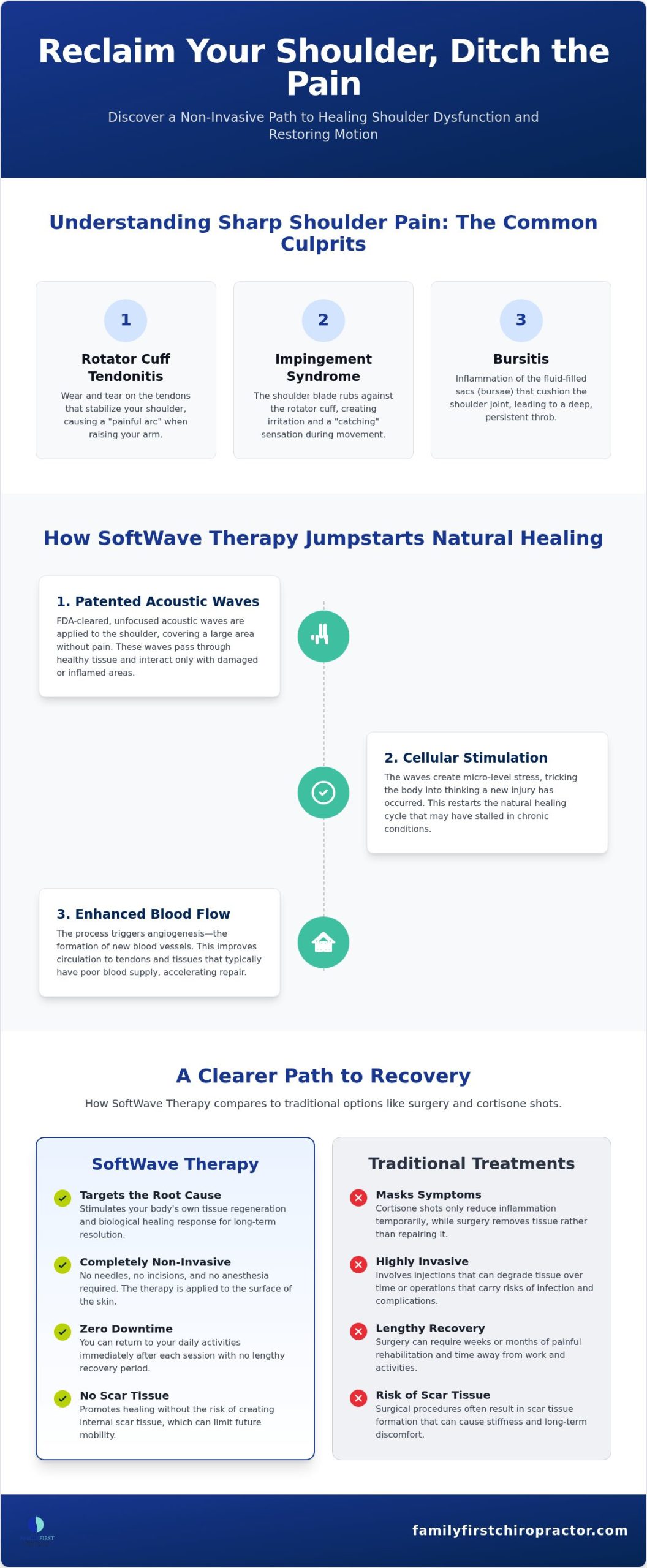
Several common culprits usually sit at the heart of this discomfort. Rotator cuff tendonitis involves wear and tear of the tendons that stabilize the joint, while bursitis refers to the inflammation of the small, fluid-filled sacs that provide necessary cushioning. Impingement syndrome occurs when the outer edge of the shoulder blade rubs against the rotator cuff, causing irritation during movement. These conditions don’t just cause local pain; they disrupt the harmony of the entire upper body. Trying to “tough it out” often backfires, as the body instinctively compensates by overusing the neck and upper back muscles. This shift can lead to secondary tension headaches or mid-back stiffness, which only makes your path to wellness more complicated.
For those seeking softwave therapy for shoulder pain charlotte, understanding these mechanical triggers is the first step in a successful partnership for health. Many clinical approaches, including Extracorporeal shockwave therapy (ESWT), focus on these specific physiological disruptions to restore proper function and comfort.
Rotator Cuff vs. Frozen Shoulder
Distinguishing between these two conditions is vital because their recovery paths look very different. Rotator cuff issues often present as a “painful arc,” where discomfort peaks specifically when your arm is raised between waist and shoulder height. In contrast, frozen shoulder, or adhesive capsulitis, involves a progressive, global loss of motion where the joint capsule actually thickens and tightens. Because the underlying mechanics differ so much, we prioritize a professional diagnosis to ensure we’re applying the right therapeutic tools for your specific needs.
When Shoulder Pain Becomes Chronic
If an injury doesn’t resolve within a few weeks, it may transition into a chronic state characterized by degenerative changes. Over time, the brain begins to “map” this persistent pain, creating a heightened sensitivity that remains even after the initial swelling subsides. While traditional rest and ice provide temporary relief for surface-level issues, they often fail to reach the deep-seated adhesions and poor circulation found in long-term cases. True restoration requires a deeper approach that can penetrate the shoulder capsule to jumpstart the body’s natural repair cycle.
What is SoftWave Therapy and How Does It Work?
When considering softwave therapy for shoulder pain charlotte, it’s helpful to understand the unique technology behind the results. SoftWave is a patented Tissue Regeneration Therapy (TRT) that utilizes electrohydraulic shockwaves to address damaged tissues. Unlike older, “focused” shockwave treatments that can be uncomfortable or even painful, SoftWave uses unfocused acoustic waves. This design allows the energy to cover a much larger area of the shoulder joint, ensuring that the entire capsule and surrounding tendons receive the benefit. Because the waves are unfocused, the treatment is entirely non-invasive and doesn’t require any numbing agents or anesthesia. The primary goal of this approach is to trigger your body’s natural biological healing response, moving beyond temporary fixes to reach the actual source of the problem.
The Science of Acoustic Soundwaves
These soundwaves travel through soft tissue at incredibly high speeds, reaching over 3,000 miles per hour. When they encounter healthy, hydrated tissue, they pass through without any resistance. However, when they hit damaged, calcified, or inflamed areas, they create a mechanical pressure that stimulates the cells. This process is often described as a form of biological trickery. By creating a safe, micro-level stress, the therapy convinces your body that a new injury has occurred in that specific spot. This restarts the healing cycle that might have stalled months or years ago. According to UConn Health’s explanation of ESWT, these waves are particularly effective for chronic conditions like shoulder tendinitis. SoftWave is an FDA-cleared technology specifically designed for pain reduction and the improvement of local blood flow.
Activating Your Natural Stem Cells
One of the most significant aspects of this technology is its ability to influence cellular behavior. The mechanical stimulus from the acoustic waves triggers the migration of your body’s own resident stem cells to the site of the shoulder pain. These cells are your body’s natural repairmen, responsible for regenerating tissue and bone. They help rebuild damaged tendons and ligaments while simultaneously reducing inflammation at the cellular level. This is why many patients notice a change in their range of motion shortly after their first session. Because the treatment relies entirely on your own biological resources, it’s considered a biological therapy rather than a chemical one. It works in harmony with your body’s systems rather than masking them with pharmaceutical drugs. If you’re looking for a natural, evidence-based way to resolve discomfort, exploring softwave therapy for shoulder pain charlotte could be the missing piece in your recovery plan.
Why SoftWave is a Game-Changer for Shoulder Injuries
The shoulder is a complex, deep-seated joint protected by layers of muscle and bone. While manual therapies like massage are beneficial for surface-level tension, they often struggle to reach the internal capsule or the specific attachment points of deep-seated tendons. This is where softwave therapy for shoulder pain charlotte offers a distinct advantage. The electrohydraulic waves penetrate deep into the joint space to stimulate angiogenesis, which is the biological process of forming new blood vessels. This is critical because many shoulder tendons naturally have very poor blood supply, which is why they heal so slowly after an injury. By increasing local circulation, we provide the essential nutrients and oxygen required for genuine tissue restoration.
For individuals struggling with chronic tendonitis, calcifications can form within the tendon tissue over time, leading to a persistent “catching” sensation or restricted movement. These hard deposits are notoriously difficult to address without surgical intervention. SoftWave technology helps break down these calcified deposits through gentle mechanical pressure, allowing the body to reabsorb them naturally. The efficiency of this process is a significant benefit for our patients; most sessions are completed in just 10 to 15 minutes. This allows you to receive advanced care and return to your daily schedule without the need for a lengthy recovery period.
Treating Rotator Cuff Tears and Tendonitis
Collagen is the primary building block of your tendons, and when a tear or strain occurs, the fibers often become disorganized and weak. SoftWave therapy supports the remodeling of these collagen fibers, helping them align properly to restore both strength and flexibility. This structural improvement directly reduces that sharp, wincing sensation many people feel during overhead movements or while sleeping. At Family First Chiropractic and Acupuncture, we often combine this technology with corrective exercises to stabilize the joint and build long-term resilience against future injuries.
Addressing Labrum Issues and Bursitis
Deep-seated inflammation in the subacromial bursa can make even the smallest arm movements feel agonizing. While many patients are steered toward cortisone injections, these often only provide a temporary window of relief by masking the pain. SoftWave offers a non-chemical alternative by targeting the inflammation at its source. It’s the same technology used by professional athletes to accelerate recovery from labrum issues and bursitis, allowing them to return to peak performance without the long-term side effects or tissue weakening associated with repeated steroid use. By choosing softwave therapy for shoulder pain charlotte, you’re opting for a path that prioritizes the long-term health of your joint tissues.
SoftWave vs. Traditional Shoulder Pain Treatments
Choosing the right path for recovery often feels like a balancing act between invasive procedures and temporary fixes. Traditional medical models typically lean toward surgery or injections as the primary solutions for persistent joint issues. While surgery is sometimes necessary, it carries the weight of high financial costs, significant downtime, and the inevitable development of scar tissue that can limit future mobility. Cortisone injections offer a different challenge; they frequently mask symptoms for a few weeks without addressing the underlying structural damage. In some cases, repeated steroid use can even weaken the very tendons you’re trying to save. SoftWave therapy for shoulder pain charlotte provides a distinct alternative by focusing on long-term biological repair rather than short-term symptom management.
Physical therapy remains a cornerstone of musculoskeletal health, yet its effectiveness is often limited by a patient’s pain threshold. If your shoulder is too inflamed to perform corrective movements, progress can stall for months. SoftWave technology bridges this gap by reducing cellular inflammation and desensitizing pain receptors safely. This allows you to participate more fully in your recovery without the fear of a “flare-up” after every session. Because there is zero downtime required, you can receive a treatment and immediately return to your daily responsibilities in Charlotte with a sense of optimism about your progress. Patients who also struggle with musculoskeletal pain in other regions often find that the same biological reset offered by softwave therapy for lower back pain charlotte can address chronic lumbar discomfort with the same non-invasive approach.
The Problem with “Wait and See”
Many people hope that a “catch” in their shoulder will simply resolve with enough rest. Unfortunately, untreated shoulder dysfunction rarely stays localized. When you instinctively guard a painful joint, your body develops compensation patterns that strain other areas. It’s common for patients to eventually seek help for neck pain in Charlotte because their upper back and cervical muscles are working overtime to assist a weakened shoulder. This prolonged guarding can also lead to muscle atrophy, making the eventual recovery much longer and more difficult. Early intervention with SoftWave helps break this cycle before it impacts your entire upper body posture.
The Synergy of SoftWave and Chiropractic Care
At Family First Chiropractic and Acupuncture, we don’t view SoftWave as a standalone tool but as a vital part of a holistic recovery plan. This technology is excellent for “prepping” the tissue; by softening deep-seated adhesions and reducing swelling, it makes chiropractic adjustments more comfortable and more precise. When the soft tissues are relaxed and healthy, the joint can be aligned to ensure proper tracking during movement. We combine this with massage and specialized exercises to create a comprehensive care plan that supports your body from every angle. If you’re ready to explore a coordinated approach to healing, we invite you to learn more about softwave therapy for shoulder pain charlotte and how it integrates with our standard of care. Families throughout the region who want proactive, whole-body wellness can also benefit from working with a trusted family chiropractor in Charlotte, NC who combines advanced recovery tools with traditional spinal care.
Experience SoftWave Therapy for Shoulder Pain in Charlotte
Transitioning from chronic discomfort to active recovery starts with a clear plan tailored specifically to your body’s needs. At Family First Chiropractic and Acupuncture, we specialize in providing softwave therapy for shoulder pain charlotte within a supportive and professional environment. Your journey toward restoration begins with a dedicated “Discovery” session. This isn’t a standard, rushed consultation; it’s a methodical diagnostic mapping process led by Dr. St. Germain. We take the time to listen to your health goals and evaluate your functional movement needs, whether that involves returning to a favorite sport or simply reaching into a cupboard without hesitation.
During this initial visit, we utilize a unique diagnostic approach often called “Feel it to Heal it.” As the SoftWave device moves across the shoulder area, the acoustic waves interact with your internal tissues in real time. When these waves pass over healthy, hydrated tissue, you’ll feel very little sensation. However, when the waves encounter damaged, inflamed, or calcified areas, they create a distinct feedback sensation that helps us pinpoint the exact origin of your distress. This biofeedback allows us to map your pain points with incredible precision, ensuring that every treatment is focused exactly where your body needs it most. Most patients feel a noticeable difference after just one session.
Your First Visit: The Discovery Session
The initial mapping is a vital step because shoulder pain is often referred from nearby structures or hidden deep within the joint capsule. By identifying the primary source of dysfunction during your first visit, we can create a more efficient path to recovery. We don’t just look at the site of the pain; we look at how your shoulder moves in relation to your entire upper body. This thoroughness ensures that we’re addressing the cause rather than just chasing the symptoms. We prioritize your comfort and clarity throughout this process, ensuring you feel fully informed before we begin your personalized care plan.
A Holistic Approach to Charlotte Wellness
Our commitment to the Charlotte community is rooted in a partnership that considers your long-term success and systemic harmony. We often integrate SoftWave therapy with other supportive modalities like acupuncture and redlight therapy to provide a multi-layered healing response. Acupuncture helps balance the nervous system and manage pain signaling, while redlight therapy supports cellular energy production to further accelerate the repair of soft tissues. This comprehensive strategy reflects the Family First commitment to lasting health and vitality. If you’re ready to move past the limitations of shoulder pain, we’re here to help. Schedule your shoulder evaluation today! and take the first step toward a more active, pain-free life.
Reclaim Your Mobility and Comfort
Living with persistent shoulder pain can make even the simplest daily tasks feel like a significant challenge. We’ve explored how advanced, FDA-cleared Tissue Regeneration Therapy works to restart your body’s natural healing cycle and improve blood flow to damaged tendons. By choosing softwave therapy for shoulder pain charlotte, you’re opting for a path that avoids the long recovery times of surgery and the temporary nature of cortisone shots. This biological approach targets the root cause of your discomfort to facilitate genuine tissue repair and long-term stability.
At our convenient Charlotte wellness center, Dr. St. Germain combines his holistic expertise with personalized care plans to ensure your recovery is both thorough and sustainable. We don’t just focus on the isolated symptom; we consider your entire physical alignment to help you regain the freedom of movement you deserve. It’s time to stop guarding your shoulder and start the restoration process with a team that views your health as a partnership. You can take the first step today when you Book Your SoftWave Shoulder Discovery Session in Charlotte. We look forward to helping you return to the activities you love with confidence and ease.
Frequently Asked Questions
Is SoftWave therapy painful for shoulder injuries?
SoftWave therapy is generally not painful; most patients describe the sensation as a series of rhythmic, mild pulses or a deep thumping. While you may feel a dull ache when the device passes over an area of high inflammation, this feedback is actually helpful for mapping your injury. The intensity can always be adjusted to ensure you remain comfortable throughout the ten to fifteen minute session.
How many SoftWave sessions will I need for my shoulder pain?
Most patients require between six and twelve sessions to achieve the best long-term results for chronic shoulder issues. While some individuals notice a difference in range of motion after just one visit, the cumulative effect of multiple treatments is what triggers sustained tissue regeneration. Dr. St. Germain will determine your specific frequency based on the severity of your condition and your body’s initial response.
Can SoftWave therapy help if I already had shoulder surgery?
Yes, SoftWave is an excellent option for those who have already undergone surgery but still experience stiffness or lingering discomfort. It helps break down internal scar tissue and improves blood flow to the surgical site without being invasive. This can be particularly beneficial for restoring mobility that may have been lost during the post-operative recovery period when the joint was immobilized.
What is the success rate of SoftWave for rotator cuff issues?
Clinical research on extracorporeal shockwave technology shows high success rates for resolving rotator cuff tendonitis and calcific deposits without surgery. Many patients report significant reductions in pain and improved overhead reaching capabilities after completing their full care plan. Because it targets the biological root of the tear or inflammation, it provides a functional solution rather than just masking the symptoms temporarily.
Are there any side effects to SoftWave therapy?
Side effects are minimal and typically resolve within twenty-four to forty-eight hours after a session. You might experience some temporary redness or a mild dull ache in the treated area, similar to the feeling after a deep tissue massage. Unlike surgery or injections, there is no risk of infection, scarring, or systemic side effects from pharmaceutical drugs, making it a very safe recovery path.
How much does SoftWave therapy for shoulder pain cost in Charlotte?
The cost of softwave therapy for shoulder pain charlotte varies depending on the complexity of your injury and the total number of sessions required for full restoration. We provide a transparent breakdown of all costs during your initial Discovery session after Dr. St. Germain evaluates your condition. This ensures you have a clear understanding of your investment in health before beginning any specific treatment plan.
Can I go back to work immediately after a SoftWave treatment?
You can return to your normal work schedule and daily activities immediately following your appointment. There are no restrictions on driving or light activity because the treatment is non-invasive and requires no anesthesia or numbing agents. We actually encourage gentle movement after your session to help support the increased blood flow and cellular activity initiated by the acoustic waves.
Is SoftWave therapy covered by insurance at Family First Chiropractic?
SoftWave therapy is currently not covered by most major insurance providers, including Medicare or Medicaid. However, many of our patients choose to use their Health Savings Account (HSA) or Flexible Spending Account (FSA) funds to cover the cost of their sessions. Our team is happy to provide you with the necessary documentation to help you manage these wellness investments effectively.