What if the most effective way to address chronic joint pain wasn’t a new medication, but a specific wavelength of light that recharges your cells like a battery? Many individuals dealing with persistent inflammation or slow recovery from injuries feel like they’ve tried every rest protocol and ice pack available without seeing lasting results. It’s frustrating when your body feels stuck in a cycle of discomfort that prevents you from staying active or enjoying your daily life. We understand that you’re looking for a solution that supports your body’s natural ability to heal rather than just masking the symptoms.
In this 2026 guide, you’ll discover how redlight therapy works at a cellular level to stimulate mitochondrial function, which helps reduce pain and accelerate the tissue recovery process. We’ll explore the clinical science behind these light-based treatments and explain how integrating this technology into a holistic wellness plan can improve your skin texture and lower systemic inflammation. This comprehensive overview provides a clear path toward understanding how light can restore your physical vitality and help you return to the activities you love with greater comfort and ease.
Key Takeaways
- Understand the mechanism of photobiomodulation and how specific light wavelengths stimulate cellular energy for systemic restoration.
- Discover how redlight therapy targets inflammation to provide relief for chronic joint pain and significantly shorten recovery times after physical activity.
- Learn why clinical-grade technology offers superior irradiance and power compared to at-home devices for deeper tissue penetration.
- Identify the benefits of increased collagen production for enhancing skin texture and reducing the appearance of fine lines or scarring.
- Explore the synergistic benefits of combining light therapy with chiropractic adjustments or acupuncture to achieve more stable and lasting health outcomes.
Table of Contents
- What is Red Light Therapy? Understanding Photobiomodulation
- Key Benefits of Red Light Therapy for Pain and Recovery
- Skin Health and Systemic Wellness Applications
- Clinical-Grade vs. At-Home Devices: What to Look For
- Integrating Red Light Therapy into Your Charlotte Wellness Plan
What is Red Light Therapy? Understanding Photobiomodulation
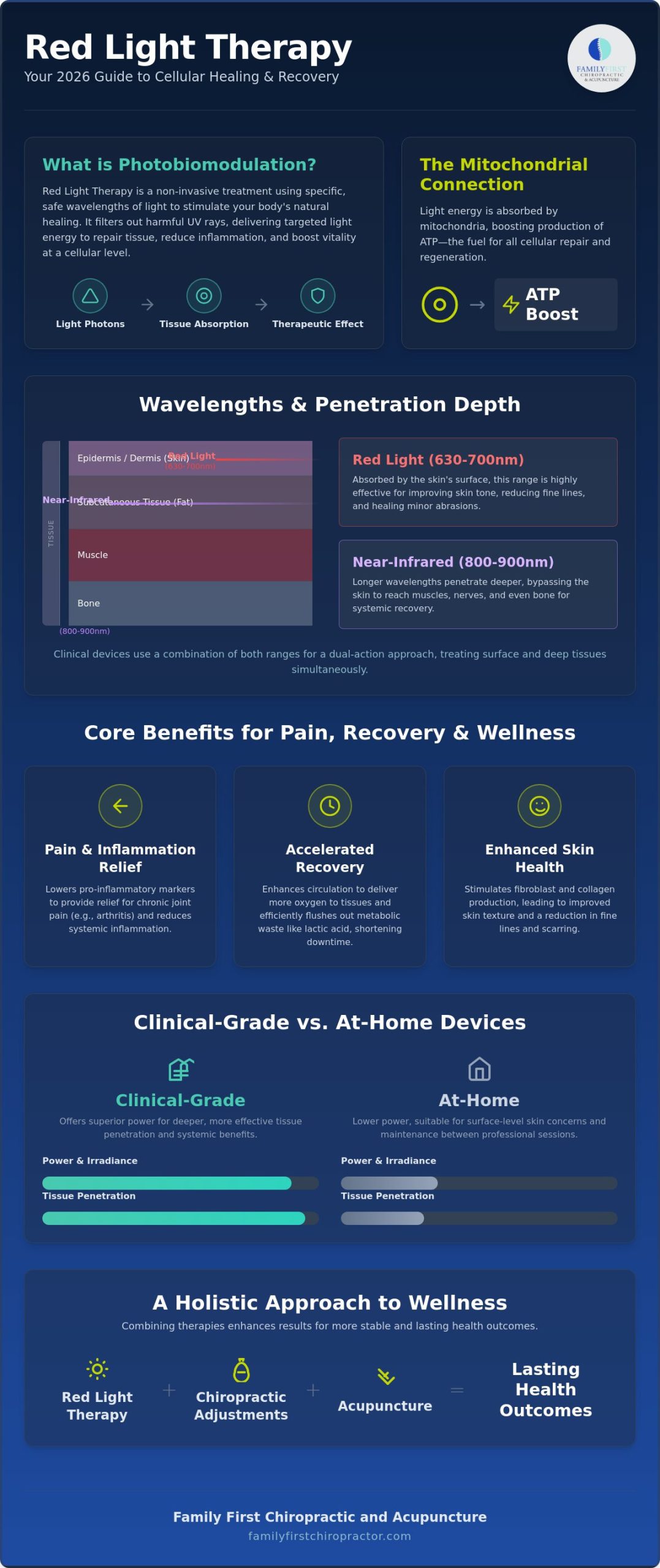
Redlight therapy is a sophisticated clinical tool that utilizes specific wavelengths of light to trigger natural healing processes within the body. While it may look like a simple red glow, the underlying science is rooted in Understanding Photobiomodulation; a process where light photons interact with biological tissues to produce a therapeutic effect. In medical and wellness environments, you’ll often hear this referred to as low-level laser therapy (LLLT) or photobiomodulation (PBM). These terms describe the same non-thermal interaction between light and our cells. Unlike a tanning bed or direct sunlight, these devices filter out harmful ultraviolet (UV) rays. This allows you to receive the restorative benefits of light without the risks of skin damage or DNA mutation. As we move through 2026, this technology has become a staple in wellness centers because it offers a non-invasive way to manage systemic inflammation and physical stress.
The Mitochondrial Connection: How Cells Use Light
Your body is made of trillions of cells, and each one contains small structures called mitochondria. Think of these as the powerhouse of the cell. When you undergo a session, your mitochondria absorb the light photons, much like a plant absorbs sunlight during photosynthesis. This absorption triggers a chemical reaction that increases the production of Adenosine Triphosphate (ATP). ATP is the primary fuel for cellular repair and regeneration. By boosting this energy source, redlight therapy helps your body fix damaged tissues and reduce inflammatory markers more efficiently than rest alone. It’s a natural way to help your body help itself.
Wavelengths and Penetration: Red vs. Near-Infrared
Not all light is created equal; the depth of penetration depends entirely on the wavelength measured in nanometers (nm). Clinical devices usually focus on two primary ranges to achieve the best results.
- The 630-700nm range (Red Light): This spectrum is absorbed primarily by the skin’s surface. It’s highly effective for surface-level issues like fine lines, minor abrasions, and overall skin tone.
- The 800-900nm range (Near-Infrared): These longer wavelengths travel much deeper. They can bypass the skin to reach muscles, nerves, and even bone.
Most clinical settings use a combination of both ranges. This dual-action approach ensures that while the surface tissues are being rejuvenated, the deeper structural layers of your body are also receiving the energy they need to heal. It’s this systemic reach that makes the therapy so versatile for both aesthetic goals and deep physical recovery. By using both wavelengths, practitioners can address a wide variety of concerns in a single session.
Key Benefits of Red Light Therapy for Pain and Recovery
While the cellular energy boost discussed earlier provides the foundation for health, the practical application of redlight therapy often centers on its ability to manage physical distress. It’s particularly effective for athletes or individuals with physically demanding jobs who need to reduce the “downtime” caused by muscle soreness. By targeting the body’s inflammatory response, this technology helps you move through the standard recovery cycle with less stiffness and discomfort. Beyond just feeling better, these sessions work to lower pro-inflammatory cytokines in the blood. This systemic reduction is crucial for those managing long-term conditions like arthritis or bursitis, where the body’s immune response can sometimes become overactive and cause persistent joint pain.
The therapeutic effects of light also extend to how your body handles circulation and waste. When the specific wavelengths reach your tissues, they encourage several key physiological improvements:
- Enhanced Vasodilation: The light helps widen blood vessels, which increases the delivery of oxygen and vital nutrients to localized areas of injury.
- Metabolic Waste Removal: Improved circulation allows the body to more effectively flush out lactic acid and other metabolic byproducts that contribute to muscle fatigue.
- Oxidative Stress Reduction: By balancing the cellular environment, the therapy helps protect tissues from the damage caused by high-intensity physical exertion.
Tissue Recovery and Wound Healing
The body’s natural “cleanup” process after an injury can often be slow and uncomfortable. Red light speeds up this cycle by stimulating the production of fibroblasts. These cells are the building blocks of tissue structure and are essential for repairing minor soft tissue tears or assisting in post-surgical recovery. By providing the necessary energy for these cells to work faster, the therapy helps ensure that new tissue is strong and healthy. This makes it an excellent option for anyone dealing with nagging injuries that don’t seem to respond to traditional rest alone.
Chronic Pain and Nerve Health
Modern life often leads to repetitive strain, such as “tech neck” or lower back discomfort from prolonged sitting. These issues are frequently tied to nerve inflammation. Redlight therapy supports the nervous system by reducing this irritation, which makes it a powerful companion to other treatments. For example, when muscles are relaxed and nerve inflammation is lowered, chiropractic care often becomes more effective because the body is less resistant to adjustments. Additionally, the sessions trigger a gentle release of endorphins; these are your body’s natural painkillers, providing a sense of relief that is both immediate and lasting. This holistic approach ensures that you aren’t just masking pain, but actually addressing the underlying systemic issues that cause it.
Skin Health and Systemic Wellness Applications
While the previous sections focused on deep tissue and joint recovery, the influence of redlight therapy extends significantly to the body’s surface and our internal regulatory systems. The skin is our largest organ, and it serves as a primary interface for light absorption. When these therapeutic wavelengths interact with dermal cells, they do more than just improve appearance; they initiate a cascade of restorative biological events. This makes the technology a versatile tool for those looking to address visible signs of aging while simultaneously supporting their body’s internal harmony. By integrating these sessions into a regular wellness routine, individuals often notice a shift in both their physical reflection and their overall sense of daily vitality.
Dermatological Benefits and Anti-Aging
Collagen is the essential protein responsible for the skin’s structural integrity and its ability to remain firm and resilient. As we age, our natural production of this protein begins to diminish, which eventually leads to the formation of fine lines and a loss of elasticity. Redlight therapy directly addresses this by stimulating the fibroblasts within the skin to increase collagen synthesis. This mechanical boost helps smooth out wrinkles and restores a more youthful texture to the face and body.
The anti-inflammatory effects of light also provide significant relief for those dealing with persistent skin irritations. By calming the sebaceous glands and reducing systemic redness, the therapy is highly effective at managing the symptoms of rosacea or eczema. Over time, consistent exposure helps the skin repair itself at a faster rate, which is particularly beneficial for fading hyperpigmentation, sun damage, or old scarring. This restorative process ensures that the skin doesn’t just look better on the surface but is actually healthier at a structural level.
The Systemic Effect: Sleep and Mental Clarity
Beyond the visible dermatological improvements, redlight therapy plays a vital role in balancing the body’s internal clock. Our circadian rhythms are deeply influenced by light exposure, and modern lifestyle habits often disrupt these natural cycles. By utilizing specialized light exposure in the morning or early evening, you can help regulate your body’s production of melatonin. This stabilization leads to more consistent sleep patterns and improved rest quality, which is fundamental for long-term health and cognitive function.
There is also a strong connection between therapeutic light and mood regulation. Exposure to these specific wavelengths can help stimulate the production of serotonin, the neurotransmitter responsible for feelings of well-being and mental clarity. For individuals who struggle with seasonal affective disorder (SAD) or general lethargy during the winter months, these sessions provide a necessary boost in energy and emotional stability. By optimizing cellular efficiency across the entire body, the therapy helps maintain a steady state of systemic harmony, ensuring you feel as good as you look.
Clinical-Grade vs. At-Home Devices: What to Look For
As redlight therapy becomes more accessible, many individuals are choosing between at-home wands and professional clinical sessions. While consumer devices like LED masks or handheld panels offer convenience, there is a significant “power gap” that impacts the speed and depth of your results. The primary difference lies in irradiance, which is the technical measure of light energy intensity reaching your skin at a specific distance. Clinical-grade panels are engineered to deliver high-density energy, often achieving in a single ten-minute session what a lower-powered home device might take hours to replicate. This efficiency ensures that the light photons penetrate deep enough into the musculoskeletal system to trigger the cellular repair mechanisms required for lasting relief.
Safety is another critical factor when dealing with high-output light. Professional systems require specific eye protection to shield the retinas from intense brightness, and the equipment is regularly calibrated to ensure consistent performance. In a clinical setting, the treatment environment is controlled to maximize the absorption of light without the risks associated with improper use. When you choose a professional environment, you’re investing in both the quality of the technology and the safety protocols that protect your long-term health.
Evaluating Device Quality
When you are researching equipment, the number of LEDs on a device is less important than the actual light output, which is measured in milliwatts per square centimeter (mW/cm²). It’s also vital to look for equipment that has received FDA clearance. Many professional systems are classified as Class II medical devices under specific regulatory codes, such as 21 CFR 890.5500, ensuring they meet strict safety and efficacy standards. Another technical detail to consider is the “flicker rate.” Lower-quality LEDs can pulse at a frequency that irritates the nervous system or causes eye fatigue, whereas professional panels provide a steady, continuous beam of light for a more comfortable experience.
Why Clinical Supervision Matters
Professional oversight is essential because it prevents “over-treatment,” a state where the cells have reached their absorption limit and the therapeutic benefits begin to plateau or diminish. By working with a knowledgeable provider, you can receive a personalized care plan that adjusts the distance and duration of your sessions based on your unique physiological needs. This guidance ensures that redlight therapy is used as a perfect “pre-adjustment” or “post-acupuncture” booster to enhance your overall results. To experience the difference that high-irradiance technology can make for your recovery, you can schedule a clinical redlight therapy session with our expert team in Charlotte.
Integrating Red Light Therapy into Your Charlotte Wellness Plan
Integrating redlight therapy into a comprehensive health strategy allows for a more profound level of healing than using any single modality in isolation. In our Charlotte clinic, we view this technology as a foundational support that enhances the efficacy of our other core services. When muscles are pre-treated with light, they become more pliable and less reactive to tension. This relaxation makes chiropractic adjustments easier to perform and much longer-lasting, as the surrounding soft tissues are no longer pulling the spine back into a misaligned state. Similarly, combining light with acupuncture creates a powerful bridge between traditional energy flow and modern cellular stimulation, providing a multi-layered approach to systemic restoration.
The Family First Approach to Holistic Healing
Dr. St. Germain takes a wide lens when designing personalized care plans, often incorporating light sessions as a primer for more intensive physical work. For patients dealing with deep-seated injuries, we frequently pair redlight therapy with SoftWave therapy to address tissue damage at multiple depths. While SoftWave uses acoustic waves to initiate a biological healing response in the joints, the light provides the immediate cellular energy needed to sustain that repair process. This multi-disciplinary strategy is part of our commitment to offering Charlotte residents the most advanced, non-invasive tools available for corrective exercise and long-term vitality.
Preparing for Your First Session
Your experience at our clinic is designed to be calm, methodical, and entirely transparent. When you arrive for your first session, it’s helpful to wear loose-fitting clothing that allows the light to have direct access to the skin in your target areas. Since the photons cannot penetrate through thick fabrics, ensuring direct contact is essential for maximizing energy absorption. Most sessions are brief, lasting between 10 and 20 minutes, making them a convenient addition to even a busy daily schedule.
It’s important to remember that while some individuals feel a sense of warmth or relaxation immediately, the most significant changes occur through consistency. Redlight therapy works best as a cumulative treatment. Just as a single workout doesn’t build a lifetime of fitness, these cellular changes build upon one another over several weeks. Most patients find that a structured schedule of two to three sessions per week initially provides the best momentum for reducing chronic pain and improving systemic health. We’re here to guide you through this process, ensuring each visit brings you closer to your personal wellness goals.
Embrace a New Standard for Physical Restoration
Choosing to prioritize your cellular health is a significant step toward long-term physical freedom. We have explored how the science of photobiomodulation recharges your body’s energy reserves, allowing you to move past the limitations of chronic pain and slow recovery. By utilizing high-output redlight therapy, you can address inflammation at its source while supporting your skin’s natural resilience and your body’s internal sleep cycles. This technology is most effective when it is part of a larger, coordinated effort to align your nervous system and optimize your movement patterns.
At Family First Chiropractic and Acupuncture, our team led by Dr. St. Germain is dedicated to providing advanced, clinical-grade technology within a supportive and holistic environment. Our convenient Charlotte location makes it easy to integrate these powerful sessions into your existing health routine, ensuring you receive a personalized care plan that fits your lifestyle. If you are ready to experience the synergistic benefits of professional light therapy and spinal alignment, we invite you to Schedule your Red Light Therapy consultation in Charlotte today. Your journey toward systemic harmony and renewed vitality is just a conversation away; we look forward to partnering with you in your health.
Frequently Asked Questions
Is red light therapy safe for everyone?
Red light therapy is considered safe for the vast majority of individuals, as it is a non-invasive and non-thermal treatment. However, we always recommend a professional consultation if you are currently pregnant, have active cancer, or take specific medications that increase light sensitivity. Our clinical team carefully reviews your health history to ensure the wavelengths are used effectively without interfering with your existing medical conditions or treatment plans.
How long does it take to see results from red light therapy?
Most patients experience a reduction in acute pain or muscle stiffness within their first few sessions. For chronic conditions like arthritis or skin rejuvenation, noticeable improvements typically appear after four to six weeks of consistent use. Because the therapy works by building cellular energy, the results are cumulative and become more stable as your body’s regenerative processes are consistently stimulated over time.
Can red light therapy help with weight loss?
While redlight therapy is not a standalone weight loss solution, it can support your fitness goals by improving metabolic efficiency. The light helps reduce systemic inflammation and supports the health of fat cells, which may assist in body contouring when paired with a healthy diet and exercise. We view it as a supportive tool that enhances your body’s ability to maintain a healthy weight through improved cellular function and recovery.
Does red light therapy hurt or feel hot?
No, the treatment is entirely painless and does not feel hot to the touch. Unlike infrared saunas that use heat to induce sweat, red light is a “cold” therapy that uses specific wavelengths to trigger biological changes without raising your core body temperature. Most patients describe the experience as deeply relaxing, often feeling a gentle, soothing warmth as their circulation improves during the ten to twenty-minute session.
How often should I get red light therapy treatments?
For optimal results, we typically recommend an initial schedule of two to three sessions per week. This frequency ensures your cells maintain a high level of ATP production, which is necessary for repairing damaged tissues and lowering inflammation. Once your specific health goals are met, many individuals transition to a maintenance plan of one session per week or bi-weekly visits to sustain their systemic wellness and vitality.
Is red light therapy covered by insurance in North Carolina?
Currently, red light therapy is generally not covered by standard health insurance providers in North Carolina. However, because it is often used for pain management, some patients are able to use their Health Savings Account (HSA) or Flexible Spending Account (FSA) funds to cover the cost of clinical sessions. We recommend contacting your plan administrator to verify your specific benefits and eligibility for light-based wellness treatments.
Can I use red light therapy if I have a tattoo?
Yes, you can safely use redlight therapy if you have tattoos. The wavelengths used in this therapy don’t contain the UV rays that cause ink to fade, nor do they use the high-intensity heat found in laser tattoo removal. In fact, the light can support the health of the skin surrounding your tattoo by promoting collagen production and reducing localized inflammation, ensuring your skin remains a healthy canvas.
What is the difference between red light and a tanning bed?
The fundamental difference is that red light heals while tanning beds utilize ultraviolet (UV) rays that can damage the skin. Tanning beds focus on stimulating melanin production for a darker pigment, which carries risks of DNA mutation and premature aging. In contrast, red light therapy uses restorative wavelengths that filter out UV rays entirely, focusing solely on cellular repair, collagen synthesis, and the reduction of chronic pain.